The Hierophant
Tarot card meaning, upright and reversed.
The Hierophant represents tradition, guidance, and shared belief.
Reversed, The Hierophant points to rigid dogma, questioning authority, and nonconformity.
The Hierophant upright meaning
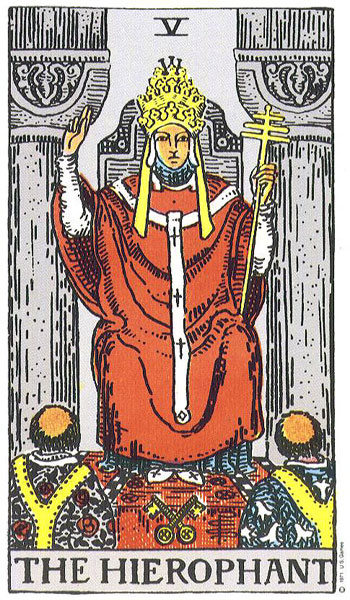
The Hierophant sits between two carved pillars with two students kneeling below him, and at his feet lie two crossed keys, the point being that the doors he opens can be handed on. He raises one hand in a gesture that is centuries older than he is. This is knowledge that comes through a line, a teacher, a tradition, a room where others have sat before you. Leaning on something tested by time will not make you less original; it hands you the keys instead of making you forge them.
The Hierophant reversed meaning
Reversed, the pillars loom and the students look up at a rule that no longer fits the people they are becoming. The crossed keys are still there, but you may need to try a door the Hierophant never mentioned. This is honest questioning, not rebellion for sport. Keep what the tradition actually gave you and set down what you were only repeating out of habit.
AffirmationI can take the keys that were handed to me and still find my own door.
Which teaching am I kneeling to out of habit rather than belief?
Common questions about The Hierophant
What does The Hierophant mean in tarot?
The Hierophant represents tradition, guidance, and shared belief. The Hierophant sits between two carved pillars with two students kneeling below him, and at his feet lie two crossed keys, the point being that the doors he opens can be handed on. He raises one hand in a gesture that is centuries older than he is.
What does The Hierophant reversed mean?
Reversed, The Hierophant points to rigid dogma, questioning authority, and nonconformity. Reversed, the pillars loom and the students look up at a rule that no longer fits the people they are becoming.
Is The Hierophant a yes or no card?
It depends. The Hierophant is balanced, so it answers with a question rather than a yes or no. Look at the cards around it and what you already feel.
Want to actually learn the cards?
Auspice teaches you tarot one card at a time with spaced-repetition coaching, until you can read for yourself and for friends. Reading is reflection here, never fortune-telling.